


Chile copper supply under pressure as disruptions mount
Posted Under Commodity News, On 13-10-2026
Source: mining.comA deadly snow avalanche at Codelco’s El Teniente mine has added to mounting supply concerns in Chile, the world’s largest copper producer, as extreme weather, labour disputes and operational setbacks threaten output across the country.
The open pit remained shut on Tuesday, while the mine’s extensive underground operations and processing plants continued running normally, the state-owned company said. Located in the Andes Mountains about 75 km southeast of Santiago, El Teniente is the world’s largest underground copper mine and Codelco’s biggest operation.
The landslide comes amid extreme weather events battering Chile, with forecasts suggesting the 2026-27 El Niño could be significantly stronger than normal, potentially ranking among the most intense on record.
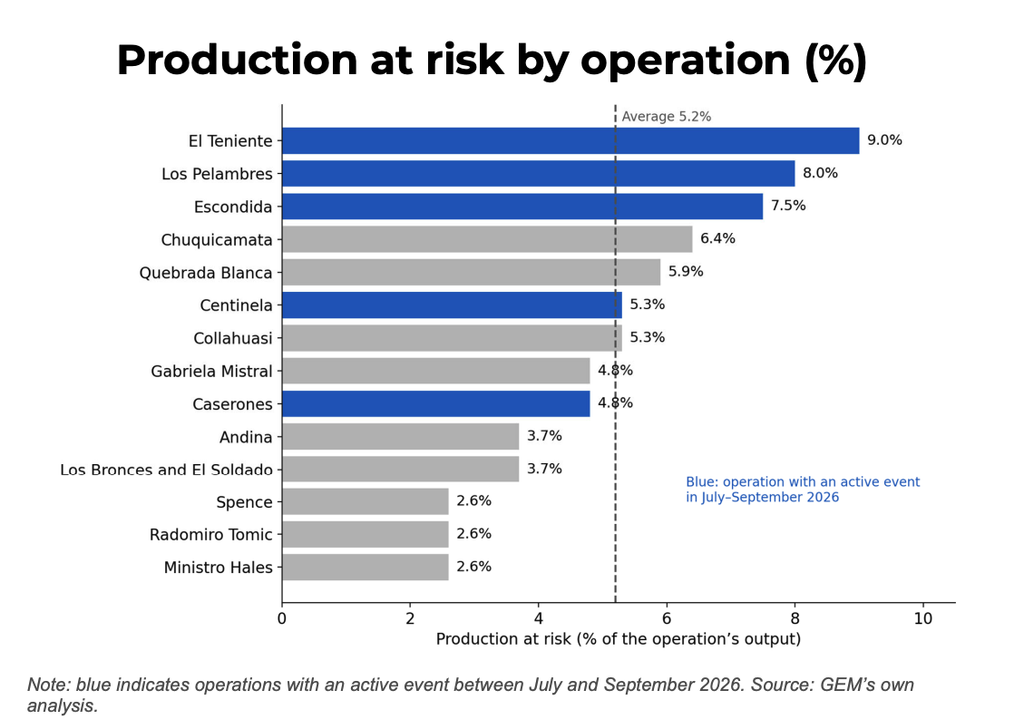
The mounting pressures underscore vulnerabilities identified in an early October study by GEM Mining Consulting, which estimated that an average 5.2% of production at Chile’s largest copper mines was at risk from strikes, severe weather, accidents and geological problems.
Growing production risks
GEM’s Production-at-Risk Index assessed 14 major copper operations across eight threats, with scores ranging from 2.6% to 9%. El Teniente ranked as the most exposed at 9%, followed by Los Pelambres at 8% and Escondida at 7.5%. Nine operations had at least one risk classified as high.
The findings highlight the challenges facing mines responsible for a significant share of global copper supply, particularly as Chile braces for a potentially intense 2026-27 El Niño weather pattern.
Severe storms have already disrupted Los Pelambres and Caserones, while forecasts suggest the developing El Niño could be considerably stronger than normal, potentially ranking among the most extreme on record.
El Teniente has also faced problems beneath the surface. Codelco recently suspended its Andes Norte project because of deep seismic risks, complicating plans to develop new production areas.
Labour unrest is adding another layer of uncertainty. An almost week-long strike at Antofagasta’s (LON: ANTO) Centinela copper mine could be nearing an end after two unions resumed negotiations with the company on Tuesday.
The stoppage is the first at Centinela, one of Antofagasta’s four Chilean mining operations, and only the second in the company’s history. The mine produced 240,400 metric tonnes of copper last year.
Meanwhile, supervisors at BHP’s (ASX, LON: BHP) Escondida, the world’s largest copper mine, are engaged in government-mediated talks aimed at averting a strike. The operation also suffered a fatal accident that temporarily halted activities.
Market expectations
Despite the growing list of disruptions, investment bank Panmure Liberum cautioned that actual production losses may not justify the strength of copper prices.
Reported mine disruptions in 2025-26, including those at Indonesia’s Grasberg mine and Kamoa-Kakula in the Democratic Republic of Congo, amount to an estimated 350,000 to 400,000 tonnes of contained copper annually, the bank said.
That represents only 30% to 50% of published disruption allowances, suggesting actual losses remain well below the levels already factored into market expectations.
“Therefore, the dominant price driver is probably speculative/financial,” Panmure Liberum said in a note.
The assessment draws a distinction between the production vulnerabilities facing miners and the supply shortages already reflected in copper prices. While Chile’s operating challenges could deepen, the global market has yet to experience disruptions on the scale investors have anticipated.
That leaves copper prices exposed to shifts in financial sentiment, even as the industry faces the prospect of further weather-related interruptions and unresolved labour disputes.
 Commodity News
  October 2026

